

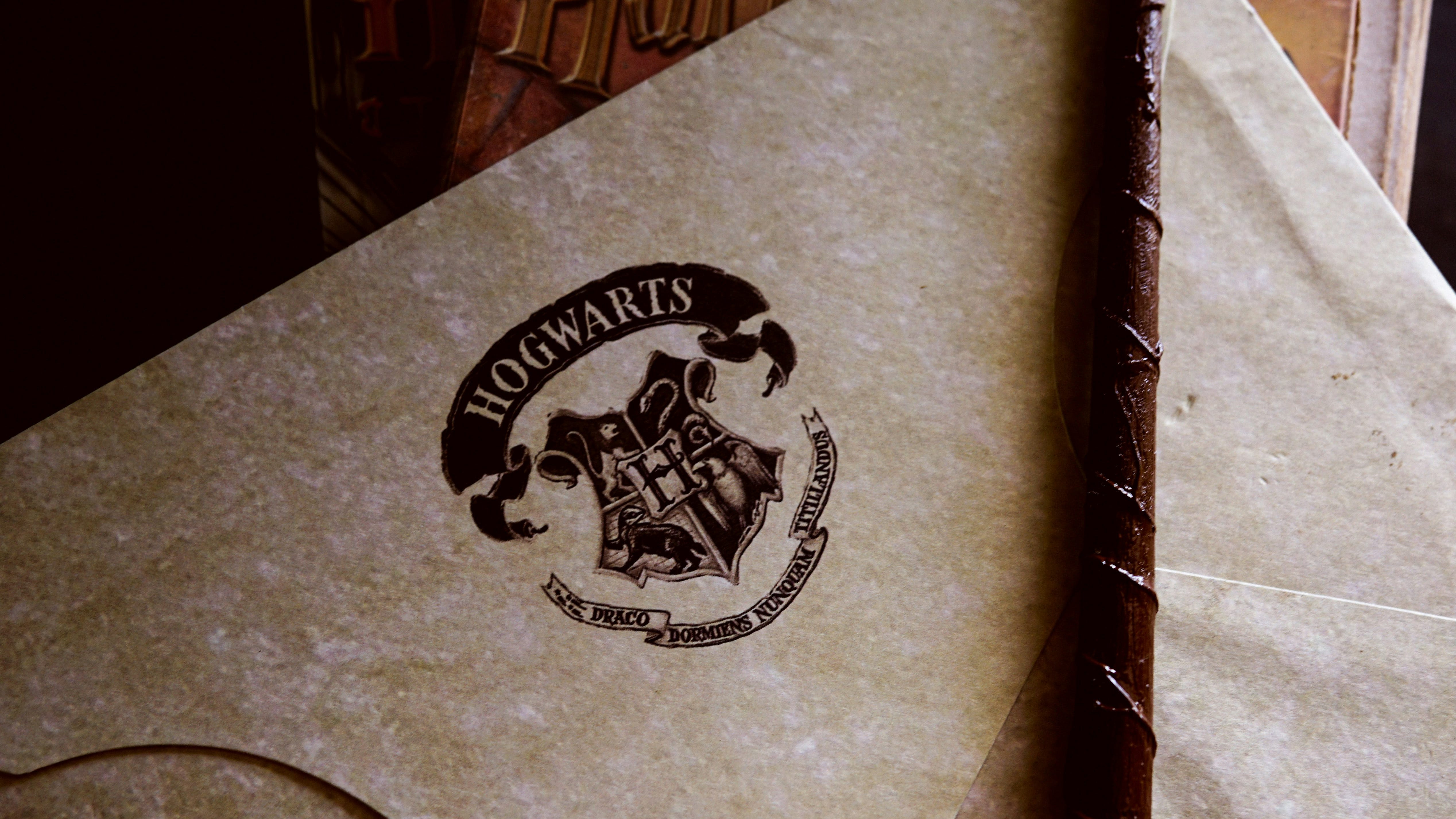
The Harry Potter series of books is more than a magical tale about a boy learning to be a wizard.
It’s also a valuable resource for the craft of writing.
Growing up, the Harry Potter series made my childhood. It’s the reason I wanted to be a wizard, not a scientist or engineer--so, which do you think I ultimately became? The truth might surprise you.
Nevertheless, if it weren’t for J. K. Rowling and the Harry Potter series, I might not have ever been inspired to write a novel at ten years old, but most importantly, ever learned how.
None of my friends wanted to be writers, no matter where I lived. No one quite understood my ambitions either. So the only resources were these books, as well as the hoard of others I had collected in those days.
However, it’s in looking back on my journey as a writer thus far that I can share with you five invaluable lessons I took from reading the Harry Potter series (more times than I care to share).
1. Write To Improve Your Craft
This first lesson applies to anything in life.
The more you do something, the better you get at it and the more natural it becomes. Writing is no different. And like a muscle, it requires daily practice.
However, the sticking point is being consistent with it.
Despite being the first entry in the series, the Sorcerer’s Stone isn’t the most well-written, but the tale Rowling crafted holds its own.
Every time I reread the series, it’s hard not to notice, particularly when I’m accustomed to reading books by authors like Stephen King and Isaac Asimov.
Though some might argue that Asimov’s style results in stories told on a bare stage, both writers have also written far more than Rowling has at this point in her career.
Even so, with each successive book, Rowling’s writing ability noticeably improves. It’s palpable as a reader. To the effect of not being consciously aware that I’m reading, or at least, I’m more willing to give up that fact.
Whereas, when reading The Sorcerer’s Stone and the subsequent books, I often find myself actively critiquing as I read. But maybe that’s just me.
If you sat down and did the math, the seven books Rowling ultimately published total well over 1 million words. Not including the number of drafts she also wrote, or the writing she did before starting on the series altogether.
With time and experience, your craft will also improve.
And much like a muscle, the less you use it, the more difficult it is to exercise when inspiration demands more of you.
2. Sensory Details Are King
Stop me if you’ve read this somewhere else: show, don’t tell.
You’re not alone. It’s one of those pieces of advice that every writer comes across at one point or another. It’s one of the most misunderstood, next to writing what you know.
The first time I came across the advice to ‘show, don’t tell,’ I made it my mission to make everything I wrote as detailed as possible. I would describe everything, from the placement of furniture to the clothes my characters wore, in unnecessary detail.
A big mistake on my part.
What I failed to understand became simple enough years later: Rowling uses a few distinct details that also appeal to the senses. The rest, she then leaves for the reader’s imagination.
Simple enough, right?
Worse yet, how can you expect them to remember anything later on?
You can find the proof of this technique if you were to ask three people who’ve read the series before what the Great Hall looks like.
The responses you receive will likely include similar details on the surface:
Four long house tables along its length for the students. In addition to one for the professors at the far end of the hall. The enchanted ceiling with floating candles overhead, and then the food--so much food.
And that’s no coincidence. Therefore, always strive to use unexpected details that appeal to the senses and that are also easy to visualize.
As a bonus: show emotion to express your feelings.
3. Every Character Has A Story
Consider for a moment your life.
The events you’ve lived through since your earliest days. How, collectively and over time, they’ve helped shape you into the person you are today. The choices you’ve made and the habits you formed. What effects do these experiences and characteristics have on your life?
What of the things you want and the things you know you need? Do you have goals and aspirations? If so, what are you willing to sacrifice to attain all of the above?
Are there things you just won’t or can’t give up, no matter the cost?
Even if that means death?
Your unique answers to these questions and many others are what define your character. The same goes for the individuals in your stories--all with their own lives as complex and multifaceted as your own.
Understanding and gaining this perspective as a writer was a crucial turning point for me.
When I examine the Harry Potter series, each of the primary and secondary characters has a rich backstory. And they add to the overall narrative in exceptional ways.
For example, and without giving away too many details, Professor Snape’s background (and therefore his story) is extraordinary in both execution and relation to the overall plot of the series.
Because people relate more to other people (as opposed to structures and abstractions), you want your characters to have lives that add to the realism of your stories--their own journey of Being.
4. Distinct Character Dialogue
When reading through the Harry Potter series, it’s impossible to dismiss Rowling’s skill when it comes to dialogue.
When I started writing, all of my characters (and I mean all of them) sounded the same; they thought similarly, too, and arrived at the same conclusions, as if they all shared the same goals, which should never be the case in any story.
Most beginning writers commit this grievous mistake.
It’s also one sure way to tell a writer is lacking in experience (which eventually goes away).
In the Harry Potter books, however, no two characters come off this way. They each possess an identifiable manner of speaking.
Their dialogue, therefore, acts as an extension of who they are on a much deeper level.
One notable example is Hagrid, the Keeper of Keys and Grounds at Hogwarts. Whose dialogue underscores his half-giant and half-human background, as well as highlighting his particular priorities (no matter how outlandish they are at times).
Characters who have sharp dialogue jump off the page.
Dialogue of this caliber also adds a level of realism readers crave.
5. Chekhov’s Gun
A literary technique implemented to significant effect in the Harry Potter series is Chekhov’s Guns.
The small and often overlooked details that plot twists rely on down the road. It’s also an excellent approach to maintaining a cohesive narrative that is free of unnecessary information, which can otherwise undermine your work.
Anton Chekhov is famous for saying, “If in the first act you have hung a pistol on the wall, then in the following one it should be fired. Otherwise, don’t put it there.”
Now, with this technique, the possibilities are endless.
In the Sorcerer’s Stone, Harry receives his father’s Cloak of Invisibility as a Christmas gift, which he uses throughout the series.
It isn’t until later that we learn its real significance.
However, without revealing any further details, I can assure you that there are numerous other examples.
When using Chekhov’s Gun in your story, there aren’t any hard or fast rules to stick to as long as you follow through in the end. This technique may also help you select the most effective details for your descriptions (see Lesson No. 2).
Otherwise, there is no limit to how far you can go--just don’t go overboard ;)
If everything is necessary, nothing is essential.
You don’t want to risk giving away too many details before your story has had a chance to unfold naturally.
Best to strike a balance that works for you.
Now take one or two of these secrets and try them out in your next draft, and watch how immersive your stories become.
If this helped you see writing through a new lens, please reply and let me know which lesson stood out to you the most.
I read every response.
P.S.
If you’ve ever felt lost between passion and direction, Clarity & Direction for Independent Creatives will help you bridge that gap.
It’s not theory—it’s the exact framework I used to find focus and momentum in my own creative work.
Fantastic breakdown. Especially about each character having their own voice (a skill I’m forever honing the more I write).
Love Harry Potter! This issue reminded me why I fell in love with music in the first place. Just like J.K. Rowling gives each character a story, every instrument and every melody I play has its own voice. When I honor that individuality, songs start telling their own story instead of me forcing them into a mold. It’s a simple shift but it makes the connection with an audience so much more genuine. A very enjoyable and helpful read Idris Elijah!