
The Stories That Shape You Are Rarely What Happened

Think about your childhood.
Not the facts. The story. Maybe you were the quiet kid. The outsider. The gifted one. The troublemaker. The dreamer.
Most people carry a narrative about who they were long before they know who they are.
The strange thing is that much of that narrative comes from memory.
And memory is not nearly as reliable as we think. Most people assume memories work like recordings. Something happens. Your brain stores it. Years later, you press play.
But memory doesn’t work that way.
Every time you remember something, you rebuild it. You reconstruct details. You fill in gaps. You connect events.
You create meaning. The memory feels stable. The story changes. That’s the paradox. We spend our lives trying to remember the past, even as we’re constantly rewriting it.
And writers understand this better than anyone.
The Brain Doesn’t Store Stories. It Creates Them
Imagine two siblings describing the same childhood.
One remembers warmth. The other remembers neglect. One remembers encouragement. The other remembers pressure. Both grew up in the same house. Both experienced many of the same events.
Yet they often tell completely different stories.
Why?
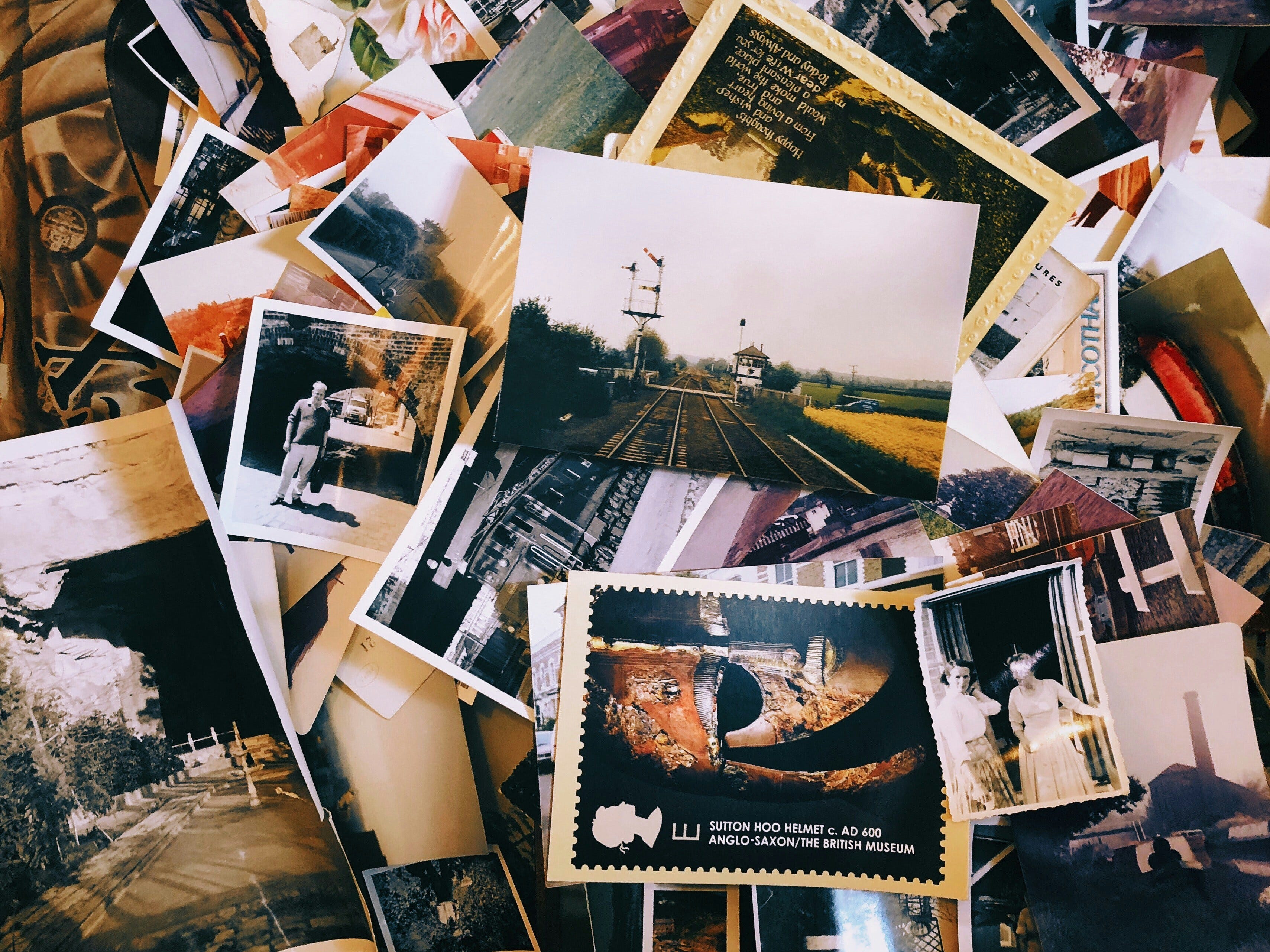
Because human beings do not remember experiences objectively, we remember them through interpretation. Facts enter the mind. Meaning leaves it. That meaning becomes memory. This explains why old photographs can feel surprising.
You look at a picture from ten years ago and realize reality looks different from how you remember it.
The photograph captured the event. Your mind captured the significance. And significance changes over time.
The older you get, the more you realize that memory is less like a camera and more like an author.
Stories Begin Where Facts End
This matters because stories are not built from events.
They’re built from interpretation. Two people lose the same job. One views it as a personal failure. The other views it as an opportunity.
Years later, they remember completely different experiences.
Not because the event changed.
Because the meaning changed.
This is where literature becomes useful. Good stories are rarely about what happened. They’re about what happened.
Readers don’t connect with events.
They connect with significance.
A character loses a loved one. A character falls in love. A character fails. Those events matter because of how the character interprets them.
The same thing happens in real life.
You are not carrying around a collection of facts. You are carrying around a collection of interpretations. And those interpretations influence how you see yourself.
Emotional Truth Is Different From Factual Truth
This is one of the most important lessons writers learn.
Facts matter.
But emotional truth often matters more.
A songwriter might combine several people into one character.
A memoirist might condense years into a few pages.
A novelist might invent an entire world.
Yet readers still recognize something true inside the story.
Why?
Because emotional truth operates differently from factual truth.
Suppose someone says:
“I felt completely alone.”
That statement may not be factually accurate.
There may have been family members, friends, or coworkers nearby. But emotionally, the statement is true. And humans respond to emotional truth more strongly than factual precision.
This is why fiction often reveals more about human nature than history books.
History tells us what happened. Stories tell us what it felt like. One gives information. The other gives understanding.
Great literature lives in that space.
Writers Are Meaning Makers
Many new writers believe their job is to document reality.
It isn’t.
Their job is to find meaning inside reality. Every story requires selection. What stays. What goes. What matters. What doesn’t?
The moment you write about an experience, you’re already transforming it.
You’re shaping it into a narrative.
You’re deciding where the story begins.
You’re deciding where it ends. You’re assigning significance. In other words, you’re reconstructing and not recording.
This is true whether you’re writing a novel, a memoir, or a song.
Think about a breakup.
Nobody remembers every conversation. Nobody remembers every text message. Nobody remembers every ordinary Tuesday. What survives are the emotional turning points.
The moments that carried meaning. The moments that changed something.
When artists create from memory, they aren’t reproducing the past.
They’re translating it.
And translation always involves interpretation.
Identity Is Built From Narrative
This is where memory becomes powerful.
The stories you tell about your past eventually become the stories you tell about yourself. Ask someone who they are, and they rarely respond with facts.
They respond with narratives.
They tell you where they came from.
What happened to them? What they overcame. What they lost. What they learned. Identity itself is largely a story. And stories influence behavior.
If your story is:
“I’m someone who never follows through.”
You’ll notice evidence supporting that belief.
If your story is:
“I’m someone who learns from mistakes.”
You’ll notice different evidence. The events may be identical. The narrative is not. This doesn’t mean inventing a fantasy. It means recognizing that meaning is rarely fixed.
The past happened once.
The story about the past evolves forever.
Literature Teaches Humility
One reason literature matters is that it reminds us that every perspective is incomplete.
Every narrator has blind spots.
Every character misunderstands something.
Every memory contains distortions.
The same is true of us. When we read novels, we gain access to viewpoints beyond our own. We see how different people interpret the same reality.
We see how easily assumptions become truths.
We see how stories shape perception.
Reading expands empathy because it reveals how fragile certainty really is. The story you’ve been telling yourself about your life may not be wrong.
But it may not be the only story available. That realization creates room for growth.
The Real Purpose of Memory
Most people think memory exists to preserve information.
But information alone doesn’t help us navigate life. Meaning does. That’s why some moments remain vivid for decades while entire years disappear.
That’s why a single sentence from childhood can echo across a lifetime.
That’s why a song can transport you twenty years into the past. Memory isn’t trying to archive your life. It’s trying to explain it.
The memories that survive are often the ones attached to meaning.
The moments that answer questions. The moments that shape identity. The moments that help us understand who we are. Or who we believe we are.
Which brings us back to the paradox. We spend our lives trying to remember what happened. Yet the thing shaping us most isn’t what happened. It’s the story we’ve constructed around it.
Writers understand this instinctively.
We don’t preserve reality. We transform it into meaning. And sometimes that meaning reveals a deeper truth than the facts ever could.
Because in the end, the stories that shape your life are rarely exact records of the past. They’re interpretations. And those interpretations become the person you are becoming.
What I appreciate is how this connects to your recent newsletters about perception. First you talked about how writers see, then how they observe and now how they remember. It’s all pointing toward the same idea: the raw event isn’t the story. The interpretation is. That’s a theme I’ve started noticing not just in writing but in my own life. The stories we repeat become the lens we use to see everything else. Thank you Idris Elijah for another engaging and fascinating read!
The part about memory being more like an author than a camera spoke directly to me. When I paint from memory I always end up emphasizing certain details and completely ignoring others. I used to think that meant I was remembering incorrectly. Now I think it reveals what mattered emotionally. The painting becomes less about documenting a scene and more about translating an experience. Thank you Idris Elijah for reinforcing ideas that will help me improve my visual work!