
You Don't Need A Niche. You Need A Center

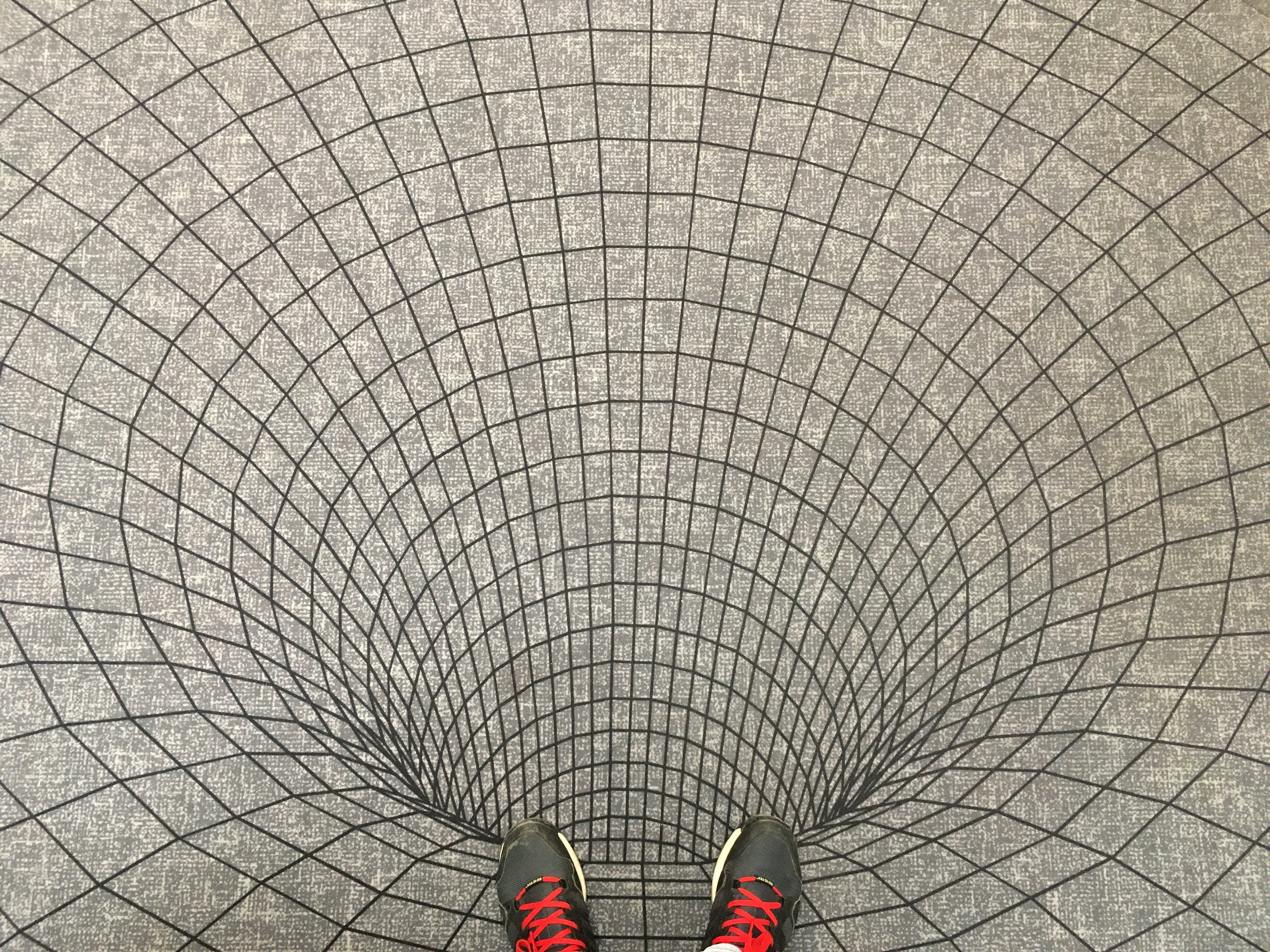
A polymath does not need one interest. He needs one gravitational pull.
Without that pull, your abilities compete for attention. Writing pulls you in one direction. Music pulls you in another.
Technology, film, psychology, business, and design all make legitimate claims on your curiosity.
But from the outside, nothing appears connected.
The problem is not that you contain too much. The problem is that other people cannot see what holds it all together.
Your range needs a center of gravity.
The Tension
The usual advice is simple:
Pick a niche.
Choose one subject. Serve one audience. Become known for one thing.
This advice works when your interests already fit inside a clear category. It becomes painful when your mind naturally moves across disciplines.
Choosing writing can feel like abandoning music. Choosing technology can feel like hiding your interest in identity. Choosing business can make the artistic parts of you feel irrelevant.
So you resist choosing.
You tell yourself that labels are limiting. You keep every door open. You describe yourself with a list:
Writer. Musician. Developer. Filmmaker. Strategist. Thinker.
The list may be accurate, but it does not give people a reason to remember you.
A list describes your range. It does not reveal your center.
This is why many multi-talented creatives remain difficult to understand despite having substantial ability. They are trying to communicate everything they can do before establishing what all of it is for.
Their problem is not a lack of talent.
It is a lack of coherence.
The Reframe
Your niche does not have to be one topic.
It can be one recurring problem, question, or transformation.
You might write essays, build software, make music, and produce films while exploring the same underlying question:
How does a person turn an inner identity into visible work?
The medium changes. The central inquiry remains.
That inquiry becomes the gravitational pull. It organizes your interests without erasing them.
This is the difference between confinement and coherence.
A cage prevents movement.
A center gives movement meaning.
The Framework
Your center usually appears where five things overlap.
Skills: What can you do?
Start with capability.
What can you reliably make, explain, organize, or improve?
Use verbs instead of titles.
Write. Teach. Design. Compose. Build. Diagnose. Translate. Direct. Connect.
Titles encourage you to choose between identities. Verbs reveal how your abilities work together.
A writer and a programmer may appear unrelated. But if both skills help you turn complicated ideas into usable systems, they share an underlying function.
Your skills are not the center on their own.
They are the instruments through which the center becomes visible.
Obsessions: What keeps returning?
Interests come and go. Obsessions return.
Look through your notes, unfinished projects, saved articles, conversations, and creative experiments. Which questions keep resurfacing?
Perhaps you repeatedly return to creative identity, human potential, mastery, reinvention, or the relationship between technology and art.
You may have explored the question through five different mediums without realizing it was the same question.
Do not ask only, “What am I interested in?”
Ask, “What am I unable to stop investigating?”
Your recurring questions often reveal more about your center than your current job or medium.
Audience: Who feels the same tension?
A center becomes useful when it connects your private obsession to someone else’s lived experience.
Who recognizes the problem you cannot stop thinking about?
Not everyone who likes creativity is your audience. But the person who feels fragmented by their own range might be.
They may be capable but scattered.
Ambitious but difficult to categorize.
Full of ideas but unable to turn those ideas into a coherent body of work.
You do not need to reduce this person to a demographic profile.
You need to understand the tension they wake up carrying.
An audience is not merely a market. It is a group of people who recognize the question.
Transformation: What can you help them move through?
People may be attracted to your interests, but they organize around movement.
What can someone see, understand, make, or become because of your work?
The movement might be:
From scattered to centered
From hidden ability to visible proof
From unrelated projects to a coherent body of work
From consuming ideas to creating something that carries their signature
The transformation does not have to contain your entire life’s mission. It only needs to describe a meaningful change you can help produce now.
Your range becomes legible when people understand where it can take them.
Language: What phrase makes it understandable?
You can discover the right center and still hide it behind complicated language.
Language compresses the pattern.
“Creative identity” is easier to remember than a paragraph about reconciling multiple talents.
“Body of work” gives scattered projects a shared destination.
“Center of gravity” explains focus without demanding self-erasure.
The phrase does not need to contain every nuance. It needs to give people a clear doorway into your work.
Good language does not capture everything you are. It helps the right person recognize why you matter.
The Practice
Complete this sentence:
I help people who feel ______ become ______ through ______.
Do not use the first blank to name everyone you could theoretically help.
Name a tension you understand.
Do not use the second to promise an abstract ideal such as success or fulfillment.
Name an observable shift.
Do not use the third to list every skill you possess. Name the method or perspective connecting them.
For example:
I help multi-talented creatives who feel scattered become centered through a clear creative identity and a coherent body of work.
Treat the sentence as a draft, not a permanent declaration.
Then test it.
Within the next seven days, create one small artifact that proves the sentence: an essay, video, framework, conversation, workshop, or tool.
A center is not found through endless introspection.
It becomes clearer through expression.
Final Thoughts
You do not need to cut away every interest that makes you difficult to categorize.
You need a gravitational pull strong enough to hold those interests in the same orbit.
The goal is not to become smaller; it’s to become legible.
I’m like the idea of a “center” and intend to use that moving forward. Instead of constantly asking myself which interest deserves my attention, I want to start looking for the thread connecting them. What keeps coming back? What am I actually trying to understand or create through all of these different interests? I think that will make it much easier to decide what gets my time without feeling like I’m abandoning everything else. Another interesting and valuable flagship issue Idris!
I’m going to start paying closer attention to the things I’m consistently drawn to across different kinds of art and ask what they have in common. Rather than treating each new interest as another direction, I want to see if there’s a bigger idea underneath it that can guide the work. That could help me make more intentional choices about what I create next instead of just following whatever catches my eye that week. Thank you Idris Elijah for this very informative read!