

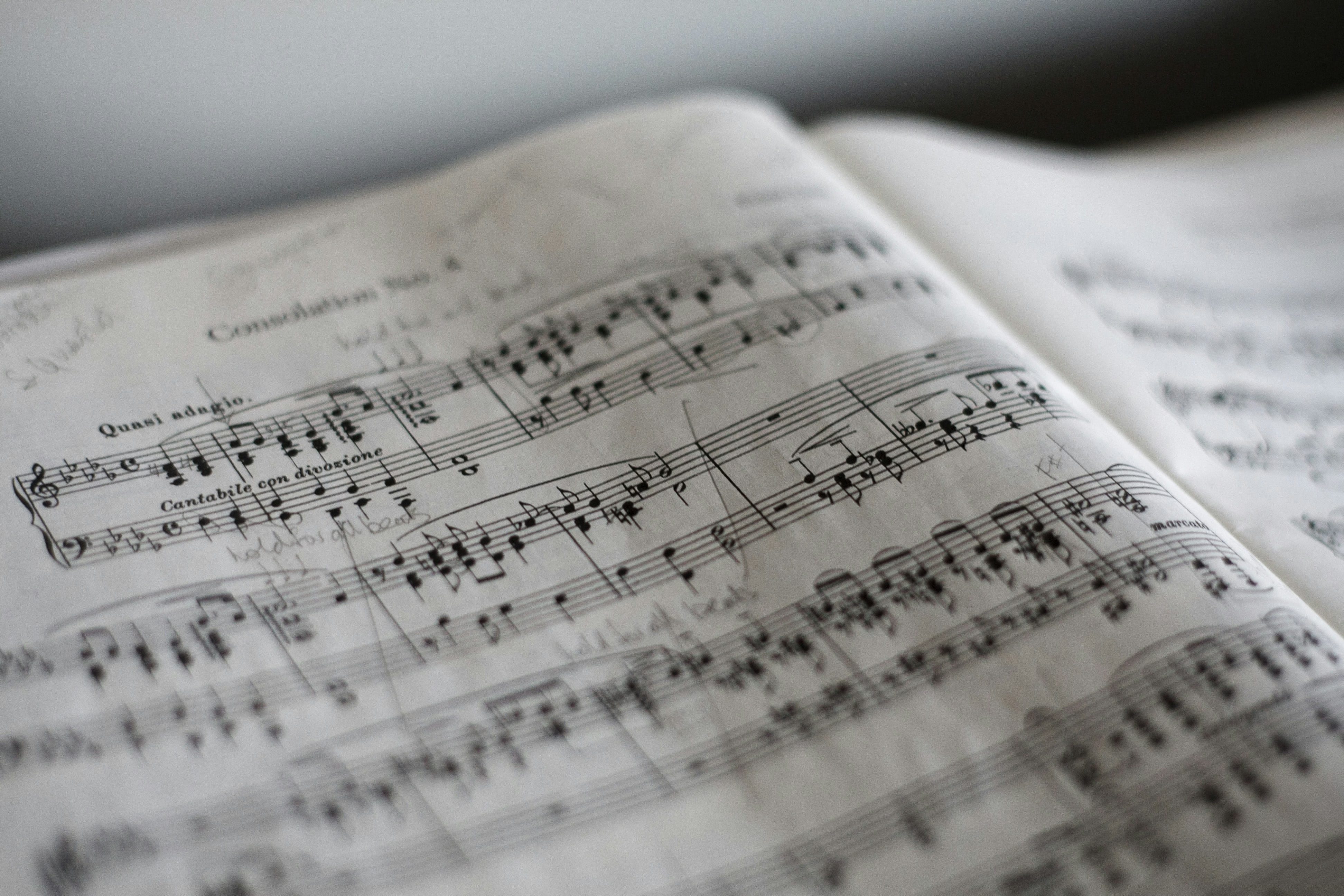
If you’re reading this, you probably care about music the same way I do—deeply, irrationally, almost spiritually.
But caring about music doesn’t mean inspiration shows up on command. Sometimes the ideas flow. Most times...they don’t.
For years, every song I wrote arrived as a lightning strike: a melody in the shower, a chord progression while half-asleep, a lyric I didn’t even fully understand yet.
I captured what I could, but I couldn’t tell you how I wrote those early songs. They just happened.
Fast-forward a decade, and that “muse-only” approach stopped working.
The last song I wrote before this year was back in 2021.
If you read my July post--Why I Quit Music… And Why I Might Start Again--you already know why I stepped away. But here’s the real reason I came back:
I’m tired of waiting for inspiration to choose me.
I want to be able to write a song on demand.
Not in a forced, robotic way--but in a craft way. In a skill way.
The same way a writer can sit down and write, even without the “spark.”
So I went back to basics.
I picked up the piano again.
I reworked old ideas.
I dug into the mechanics of composition.
And now I’ve built a simple, repeatable process that lets me create music even on the days I feel empty.
If you’re a musician, producer, or singer-songwriter who wants the same thing, here’s the framework.
It’s the exact one I’m using right now as I rebuild my voice from the ground up.
My 7 Steps to Write a Song Even When You’re Not Inspired
Step 1: Pick a Key Signature
Don’t overthink this. Pick a key you like--or pick one at random.
I almost always go to E Natural Minor.
It just feels like home.
Whatever you choose, lock it in and move on.
Step 2: Choose a Chord Progression
You’re not trying to reinvent harmony.
You’re trying to create momentum.
Grab a progression that feels good.
If you’re stuck, steal from the greats:
I–V–vi–IV (the global hit-maker)
IV–I–V–vi
vi–IV–I–V
Adele’s Someone Like You, Swift’s Bad Blood, and Sia’s Cheap Thrills all use variations of these patterns.
There is no “wrong” choice here—only starting points.
Step 3: Create a Simple Melody (Your Motif)
Stay inside the scale of your key.
Play around until you land on a short melodic phrase--one to four bars--that feels clean and repeatable.
This is your motif, your building block, your seed.
Keep it stupidly simple.
Simplicity survives the creative process.
Step 4: Use Compositional Tools to Grow the Idea
This is where your melody turns into music.
Here are the four tools that matter:
Repetition – restate your motif
Retrograde – play it backward
Sequence – shift it up or down the scale
Transformation – alter notes or rhythm after establishing the original
These tools give your music intention--not randomness.
Example structure:
Motif (2 bars)
Retrograde (2 bars)
Sequence (2 bars)
Original motif again
Transformation to close
This elevates even a simple idea into something that feels crafted.
Step 5: Shape the Left Hand (Your Harmony)
Your chord progression is the foundation.
Now experiment.
Break the chords
Add rhythm
Syncopate
Arpeggiate
Play them full and heavy
Or stripped and sparse
This is where vibe happens.
Step 6: Add Structure, Dynamics, and Cadence
Once your musical idea has legs, turn it into a song.
Break your sections into verse, chorus, bridge, intro, and outro
Add dynamics so your music breathes
Use cadences to close phrases
The three that matter:
Authentic Cadence — V → I (feels like home)
Plagal Cadence — IV → I (the “amen” cadence)
Half Cadence — ends on V (suspense)
Structure gives your music shape.
Dynamics give it emotion.
Cadences give it meaning.
Step 7: Polish and Finish
Listen to what you created.
Adjust what feels off.
Tighten what feels loose.
Then finish the damn thing.
Perfection is not the goal.
Completion is.
The only difference between a songwriter and someone who “used to write music” is this ability to finish.
Final Thoughts: Stop Waiting for the Muse
Inspiration is a gift, sure—but it’s unreliable.
Skill isn’t.
The more I practice this process, the more confident I feel. The more I understand the rules, the freer I become to break them.
And the more I write, the more my identity as a musician returns.
If you want to write songs consistently, treat it like a craft.
Not a miracle.
Your best work isn’t hiding from you.
It’s waiting for you to start.
What I love most about this is how universal the process feels. Every art form has its version of choosing a key, finding a motif and building it out with intention. I can easily apply that to my painting too. Seeing music broken down this way is a reminder that creativity isn’t some mysterious lightning strike. It’s a series of choices, patterns and rhythms you can rely on. It’s such an encouraging message for anyone juggling multiple creative identities and trying to find their way back into the work. Another informative and insightful read Idris Elijah!
Love the songwriting content! There’s something so validating in seeing someone admit that inspiration eventually stops being enough and you need a real method. The clarity of your 7 steps makes the whole process feel approachable. Not mystical, not intimidating. Just a craft you can return to even when you’re tired, unsure, or coming back after years away. It’s really validating to see that structure doesn’t kill the creativity. It actually protects it. I needed to read this to know I’m on the right path with my music so thank you Idris Elijah and have a happy holiday!