
Unveiling the Mysteries: Exploring Mysticism and Esoteric Knowledge
A Personal Journey into Life’s Deeper Meanings

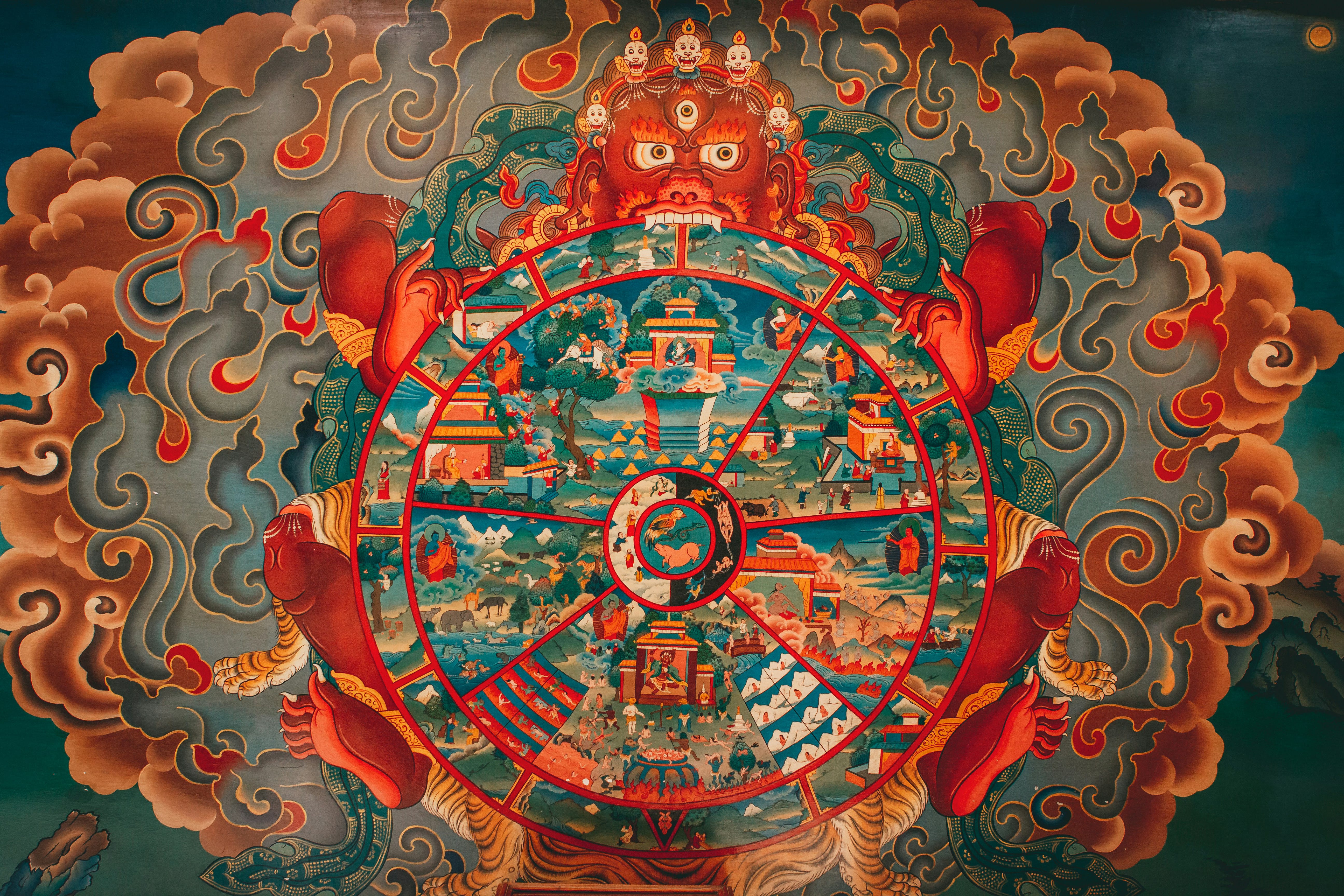
When I was about five years old, I learned about death.
Not as a result of someone I knew passing away, but instead through a conversation with one of my mother's dearest friends. I was spouting out how I would learn as much as possible and help make the world better. I would experience the advancements of humanity and see all the wonderful things we could come up with.
While driving to a destination unknown to me now, my mother's friend looked at me, and kind of matter-of-factly stated that I wouldn't live forever. One day I would die.
This struck me as contrarian to what I believed, since up to that point I hadn't been aware of death as a concept.
That moment, driving down a highway in near darkness, somewhere in Washington State, altered my plans. But it also made me wonder, what was the point of life if we die in the end?
What was the purpose of life and existence if it all came down to the return of our flesh to the earth and our spirit to the Most High?
For a long time, I struggled with this revelation of sorts.
Three events taught me a lifetime of lessons where death is concerned.
The first was when Aaliyah died on August 25, 2001, at 22 years old. She was my favorite artist growing up, and I remember watching the coverage of her tragic death on MTV and completely losing my shit. It was like my heart had been ripped from my chest and all the love I had had evaporated in an instant.
I didn't understand how something like that could happen.
I spent the following months watching every bit of coverage relating to her death, not out of obsession, but out of a need to understand what went wrong. As if I could do anything to undo the pain and hurt so many were feeling at 9 years old.
The second event occurred less than a month later on September 11, 2001.
I was preparing for school when the first plane hit the North Tower. I was still living in Washington State, and at first I didn't understand what was happening, much like everyone watching worldwide. What I did understand was that a lot of people had lost their lives tragically.
Much as I had when Aaliyah passed, I consumed every piece of information about that day and the days leading up to and following that tragic day.
Since this was before we had internet in the house, I consumed a lot of news coverage, documentaries, and special reports.
My need to understand what took place that day and why continued for many years until I visited the New World Trade Center in 2016.
The last event that shaped my perspective on life and death was the passing of my great-grandmother in 2003.
To me, her death was sudden, but as I have learned through the years, not only was she blind as a result of diabetes, but she was stubborn and didn't adhere to her doctor's orders when it came to taking her medication.
This death was different than the others, because it was the first death that occurred to someone I knew. Someone I loved and cherished since I was brought into the world.
These events furthered my need for understanding. I had existential questions about life and its meaning from a young age.
It would take several more years and the accompanying life experiences before I discovered mysticism and esoteric knowledge.
Mysticism refers to pursuing a direct, personal experience of the divine or ultimate reality, often through meditation, contemplation, or rituals.
Conversely, esoteric knowledge involves hidden or specialized wisdom accessible only through study, initiation, or insight--think ancient texts or secret teachings.
These concepts have guided humanity for centuries, offering pathways to explore ancient wisdom, uncover hidden truths, and find deeper meaning in life beyond the material world.
My experience, when I was little more than a boy, launched me on a path that led me to uncover many truths about life and its meaning.
This newsletter will explore their historical roots, explain how they work together to satisfy existential questions, and provide real-world examples that bring them to life.
Historical and Cultural Context
Throughout history, groups like the Rosicrucians or Gnostics preserved these teachings through initiation rites and guarded knowledge, ensuring their survival across generations.
Some of the knowledge they preserved can be in three traditions.
The first is Judaism (Kabbalah), a mystical tradition focused on understanding the divine through texts like the Zohar and contemplative practices.
The second is Islam (Sufism), the mystical branch of Islam emphasizing love, devotion, and remembrance of God (e.g., through poetry and dhikr).
The third is Hinduism, rich with esoteric texts like the Upanishads and practices like yoga that help people connect with the universal self (Atman).
Though varied, each seeks to tap into ancient knowledge passed down through the ages to answer our more profound questions about life and its meaning.
Mechanism for Deeper Meaning
Esoteric knowledge represents the intellectual path.
This involves studying complex texts, symbols, or philosophies--like deciphering the Tree of Life in Kabbalah or the metaphysical layers of Hindu scriptures--to gain profound insights into existence.
Mysticism represents the experiential path.
Through meditation, chanting, or ecstatic dance, mysticism fosters a transformative, personal connection to the divine or the cosmos.
Combined, they address humanity's thirst for meaning: intellectual study provides clarity and structure, while mystical experience offers emotional and spiritual fulfillment.
By now you know I am not religious, but rather spiritual.
Over the years, this has allowed me to objectively look at the many religions I have practiced as a result of family and close friends.
I learned very early on that most world religions teach the same basic ideas, but they vary in how they are worded or interpreted.
In many ways, they are all connected.
Together, versus individually, I have gleaned a greater truth about life and its meaning. However, I will not go into detail here.
The journey to finding meaning and purpose in life is individual. It's often also lifelong, better suited to those prescribed to lifelong learning.
I have found that the more you learn, the more questions you have to ask; thus, this journey is infinite but not impossible to grasp in this lifetime.
Practical Examples
Practitioners of Kabbalah study the Zohar (a foundational Kabbalistic text) and meditate on the Sefirot (divine attributes) to align themselves with cosmic order.
This has influenced Jewish thought and even modern spirituality.
Sufis engage in dhikr (remembrance of God through rhythmic chanting) and interpret the Quran esoterically, fostering communities centered on love and unity that resonate globally.
These practices have inspired art, philosophy, and social movements, from Rumi’s poetry to the spread of mindfulness in the West.
Comparative Analysis
We've seen that the three examples given, Judaism (Kabbalah), Islam (Sufism), and Hinduism each explore the ideas of Mysticism and Esoteric Knowledge differently.
Kabbalah emphasizes structured study and contemplation.
Sufism blends devotion with ecstatic practices.
Hinduism integrates physical disciplines (yoga) with esoteric philosophy.
Conversely, Gnosticism’s hidden teachings contrast with the open interpretations of New Age movements. Some question whether mystical experiences are genuine or psychological, fueling ongoing discussions.
The takeaway I want to impart is that diverse traditions highlight the universal human quest for truth, adapted to unique cultural lenses.
Whether religious or spiritual, I encourage you to dig deeper and study widely.
The answers you seek are out there.
Like me, you will see that everything is connected. We are all connected.
Quick Recap: Exploring Mysticism and Esoteric Knowledge
Mysticism and esoteric knowledge offer a dual intellectual and experiential path to explore life’s mysteries. As Rumi wrote, "Beyond ideas of wrongdoing and rightdoing, there is a field. I’ll meet you there."
Through my experiences, and so through your own, you'll discover great truths and hopefully a deeper understanding and appreciation for life itself.
I encourage you to delve into these traditions through books, practices, or discussions to uncover your own insight.
The information is out there, if only you decide to set aside your preconceived notions, and dare to dig deeper.
So pick up the Upanishads or join a local meditation group.
I grew up in a very religious area of the country and the idea of following our own path to discover life’s mysteries was frowned upon, to put it mildly! Even as a child that didn’t feel right to me. None of us truly know the mystery of life and death and what it all means. We are all just trying to make our way through this world the best we can. Whatever path we choose should be respected and we can all learn from each other in the process. I’m gonna dig deeper into this topic now. Thank you Idris Elijah!
There is a Book called The Denial of Death by Ernest Becker. If you haven't encountered it, I suggest it as a wonderful reading piece.